

Bolsas Mundiales en tiempo real

Wall Street

Teoremas Matemáticos

El Genio

Futuros de Materias Primas en tiempo real
Bigdata , Inteligencia Artificial , Capital Markets


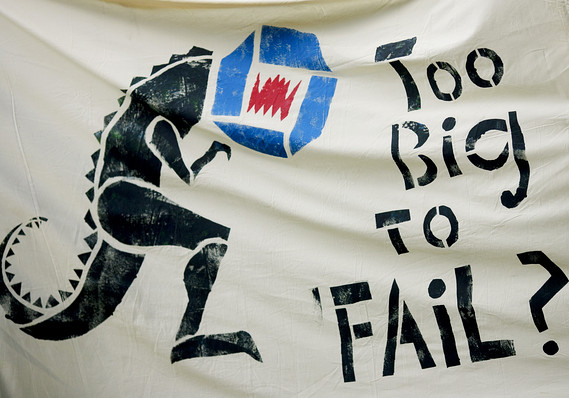
¿ Demasiado grande ?
CDS

Flujo del Crédito
Finanzas para todos

Inmobiliario





1 comentario:
NEW YORK (Dow Jones)
A handful of large financial institutions have said they don't intend to sell additional government-backed bonds, but with a mountain of debt maturing amid a government proposed overhaul of the still fragile banking system, some of them may want to bite their lips.
A massive $125 billion in investment grade-rated bank debt alone is set to mature during the remainder of 2009, with $239 billion maturing during 2010, according to data provider Dealogic. That's a huge amount to refinance, and considering there is now a limited pool of investors willing to buy and hold non-guaranteed bank debt, some banks should be concerned how they're going to replace that debt.
The Federal Deposit Insurance Corp.'s Temporary Liquidity Guarantee Program (TLGP) was established late last year in an effort to restore liquidity to a dried-up banking industry. Banks were able to sell debt at affordable levels thanks to backing by the federal government complete with AAA ratings.
The program has proved popular from its onset, with over $242 billion of the notes sold, according to Dealogic. But issuance has recently waned as banks have sold debt without a net in a perceived demonstration of rediscovered independence.
"Morgan Stanley does not plan nor expect to issue any more debt under the FDIC-guaranteed debt program," said Morgan Stanley spokesman Mark Lake. And late Thursday, U.S. Bancorp (USB) Chief Executive Richard Davis said the bank won't be issuing any more debt backed by the FDIC.
This comes as banks are seeking to escape the embrace of the government by paying back funds they got under the Treasury's Troubled Asset Relief Program last year at the height of the crisis. Regulators stipulated that any major financial institution wishing to repay TARP had to prove that it could tap the stock market and sell debt minus a government guarantee.
Morgan Stanley, Goldman Sachs Group Inc. (GS) and even struggling Citigroup Inc. (C) are among the banks that have successfully sold bank bonds out from under the umbrella of the FDIC program, and have said they plan to seek additional financing via the non-guaranteed bond market in the future.
Publicar un comentario